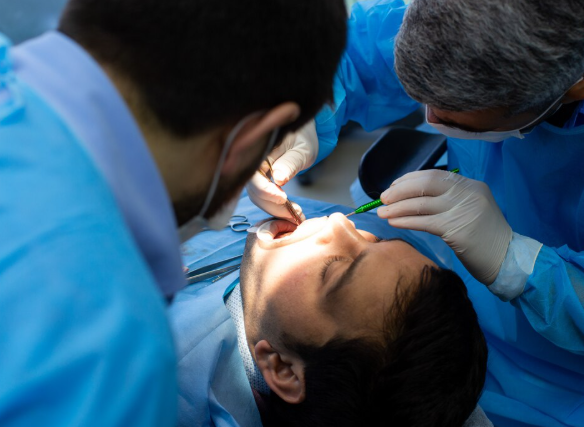
Dental implants replace missing teeth by placing small titanium posts into the jawbone, where they provide support for crowns, bridges, or full arch restorations. Although implant placement is a routine procedure for appropriately selected patients, some cases involve surgical challenges that require additional expertise. The condition of the jawbone, the location of missing teeth, existing oral health concerns, and the complexity of the planned restoration all influence who should perform the procedure.
An oral surgeon for dental implants may be recommended when treatment involves significant bone loss, impacted teeth, complex extractions, or other conditions that require advanced surgical planning. Not every patient needs an oral surgeon for implant placement. However, understanding when specialist involvement is appropriate can help patients evaluate their treatment options and make informed decisions.
What Does an Oral Surgeon Do During Dental Implant Treatment?
An oral surgeon is a dental professional with additional surgical training in treating conditions involving the teeth, jaw, mouth, and surrounding facial structures. Their training includes procedures such as complex tooth extractions, bone grafting, jaw surgery, and dental implant placement.
During implant treatment, an oral surgeon evaluates the patient's oral structures and determines whether the jawbone can support the planned implants. The assessment may involve a physical examination, dental X-rays, and three-dimensional imaging to understand bone dimensions and identify important anatomical structures.
The surgeon's responsibilities may include:
- Evaluating jawbone density, volume, and structure.
- Identifying nerves, sinuses, and other anatomical considerations.
- Removing damaged or non-restorable teeth when necessary.
- Performing bone grafting or other preparatory procedures.
- Placing dental implants in the planned positions.
- Monitoring surgical healing and implant integration.
Implant treatment may also involve a restorative dentist who designs and places the final crown, bridge, or prosthesis. Coordination between surgical and restorative professionals helps ensure that implant placement supports the intended appearance, bite, and function.
When Is an Oral Surgeon Needed for Dental Implants?
The need for an oral surgeon depends on the patient's clinical condition and the difficulty of the planned procedure. Many straightforward implant cases can be managed by appropriately trained general dentists or implant specialists. More involved cases may benefit from a professional with advanced surgical training.
1. Significant Jawbone Loss
Dental implants need sufficient bone to remain stable after placement. When a tooth has been missing for an extended period, the surrounding jawbone may gradually shrink because it no longer receives stimulation from the natural tooth root.
Periodontal disease, previous infections, trauma, and tooth extractions can also contribute to bone loss. If the remaining bone cannot provide adequate support, the treatment plan may require bone grafting before implant placement.
An oral surgeon can assess the available bone and determine whether grafting is necessary. The procedure involves placing graft material in areas where additional bone volume is needed. Healing may take several months, depending on the extent of the graft and the patient's response to treatment.
2. Bone Grafting and Sinus Augmentation
Bone grafting is often considered when the jaw lacks sufficient height or width for predictable implant placement. The graft material may come from the patient's own bone, a donor source, an animal-derived source, or a synthetic material, depending on the clinical situation.
For certain upper-jaw implants, sinus augmentation may also be necessary. This procedure creates additional bone volume beneath the sinus cavity when the existing bone height is insufficient.
These procedures require careful planning because the surgeon must account for the location of surrounding structures and the amount of bone needed for implant stability. The healing period depends on the procedure, graft material, and individual clinical factors.
3. Complex Tooth Extractions
Some patients need one or more teeth removed before dental implants can be placed. Simple extractions may not require specialist involvement, but teeth that are severely damaged, impacted, fractured below the gumline, or positioned close to nerves can make removal more complicated.
An oral surgeon has additional training in managing difficult extractions and surgical complications. The procedure may involve removing surrounding bone, sectioning a tooth into smaller pieces, or carefully protecting nearby anatomical structures. The surgeon also evaluates whether an implant can be placed during the same appointment or whether the extraction site needs time to heal.
Several factors can make an extraction more complex:
- Teeth with extensive structural damage or deep fractures.
- Impacted teeth that have not fully emerged.
- Roots positioned near important nerves or sinus cavities.
- Active infection affecting surrounding tissues.
- Existing bone damage that may require grafting.
The timing of implant placement depends on the condition of the extraction site and the amount of available bone. Immediate placement may be appropriate in selected cases, while others require a separate healing period before implant surgery.
4. Implants Near Important Nerves or Sinus Cavities
The upper and lower jaws contain anatomical structures that must be considered during implant surgery. In the lower jaw, the inferior alveolar nerve supplies sensation to the lower lip, chin, and teeth. In the upper jaw, the maxillary sinuses sit above the back teeth and can limit the available bone for implant placement.
An implant positioned too close to a nerve may cause sensory complications. Similarly, insufficient bone beneath the sinus can make implant placement difficult without additional preparation. Three-dimensional CBCT imaging helps the dental team evaluate these structures and plan implant positions with greater precision.
An oral surgeon may be recommended when the procedure involves challenging anatomical conditions. Surgical planning helps determine the appropriate implant length, diameter, angle, and placement position. The objective is to establish adequate support while reducing the risk of injury to surrounding structures.
5. Multiple Missing Teeth or Full Arch Implant Treatment
Replacing several missing teeth requires more extensive planning than placing a single implant. The dentist must consider the relationship between the implants, the shape of the jaw, the patient's bite, and the design of the final restoration.
Full arch procedures, including All-on-4 and All-on-6, use multiple implants to support a fixed prosthesis. The surgical plan must account for implant distribution, bone availability, and the forces that the restoration will experience during chewing.
An oral surgeon may be involved when treatment includes:
- Multiple implant placements in one or both jaws.
- Extensive bone grafting before implant placement.
- Removal of several failing or damaged teeth.
- Full arch reconstruction involving complex surgical conditions.
- Previous implant failures requiring corrective treatment.
Not every full arch procedure requires an oral surgeon. The appropriate provider depends on the complexity of the case, the clinician's training, and the surgical requirements. Patients should ask who will perform each stage of treatment and how the surgical and restorative teams coordinate their work.
6. Previous Dental Implant Failure
Dental implants have high success rates, but complications can occur. An implant may fail to integrate with the jawbone, become loose, develop an infection around the surrounding tissue, or experience problems caused by excessive bite forces.
Previous implant failure does not automatically prevent a patient from receiving another implant. However, the reason for the failure needs to be identified before additional treatment begins. An oral surgeon can evaluate the affected area, assess the remaining bone, and determine whether the failed implant needs removal or corrective surgery.
Treatment may involve removing the implant, cleaning infected tissue, rebuilding damaged bone, and allowing the area to heal before another implant is considered. The replacement approach depends on the condition of the surgical site and the factors that contributed to the original failure.
7. Medical Conditions That Affect Implant Surgery
A patient's general health can influence how the body responds to oral surgery and heals after implant placement. Certain medical conditions and medications may require additional evaluation or coordination with other healthcare professionals.
Conditions that may affect treatment planning include:
- Uncontrolled diabetes, which can interfere with wound healing.
- Osteoporosis and medications that affect bone metabolism.
- A history of radiation therapy involving the jaw.
- Blood-clotting disorders or medications that affect bleeding.
- Immune system conditions that may influence healing.
These factors do not automatically disqualify someone from receiving dental implants. The dental team needs an accurate medical history and information about current medications before recommending surgery. In some cases, additional medical clearance or changes to the treatment schedule may be necessary.
How Is a Dental Implant Consultation Performed?
A dental implant consultation helps determine whether implant placement is appropriate and whether specialist involvement is needed. The appointment generally begins with a review of the patient's dental history, current concerns, previous treatments, and general health.
The clinician then examines the teeth, gums, and jawbone. Dental X-rays or CBCT scans may be recommended to evaluate bone dimensions and identify anatomical structures that could affect surgery. These findings help establish the implant position and determine whether preparatory procedures are necessary.
At a practice such as Implant Oral Surgery & Aesthetic, patients can discuss their dental treatment needs and available care options. The practice's approach to implant treatment should be understood through the proposed clinical plan, including the professionals involved, expected healing period, and restorative stages.
A consultation may cover the following points:
- Whether the patient is a suitable candidate for implants.
- Whether bone grafting or tooth extraction is required.
- The recommended number, position, and type of implants.
- The expected surgical and restoration timeline.
- Anesthesia options and postoperative instructions.
- Estimated treatment expenses and available payment arrangements.
Patients who need additional restorative work may also discuss options such as dentist caps for teeth, which can restore individual teeth when their structure has been damaged. The appropriate treatment depends on whether a tooth can be preserved or needs replacement.
Oral Surgeon vs. General Dentist: Who Should Place Dental Implants?
Both general dentists and oral surgeons may perform dental implant procedures, provided they have the appropriate training, experience, and qualifications. The main difference often lies in their clinical training and the complexity of procedures they are equipped to manage.
General dentists may handle straightforward implant cases, particularly when the patient has adequate bone volume and healthy surrounding tissues. Oral surgeons receive additional surgical training that prepares them to manage more complicated conditions involving the jaw, nerves, bone, and surrounding structures.
The following comparison explains their typical roles:
Area of care
General dentist
Oral surgeon
Routine implant placement
May perform
Performs
Complex extractions
Depends on training
Advanced surgical training
Bone grafting
Depends on training
Advanced surgical training
Sinus augmentation
Depends on training
Advanced surgical training
Complex implant cases
Depends on experience
Often involved
Corrective implant surgery
Depends on training
Advanced surgical training
The right choice depends on the patient's needs rather than professional titles alone. Patients should ask about the provider's implant training, experience with similar procedures, and approach to managing potential complications.
Recovery After Dental Implant Surgery
Recovery depends on the number of implants placed, the extent of surgery, and whether additional procedures such as bone grafting were performed. Patients may experience swelling, tenderness, minor bleeding, and discomfort around the surgical area during the initial healing period. These symptoms generally improve over several days, although more extensive procedures may require additional recovery time.
Following postoperative instructions helps protect the surgical site and supports healing. Patients should follow the surgeon's guidance regarding eating, oral hygiene, medication, and activity restrictions.
Common recovery recommendations include:
- Eat soft foods during the initial healing period.
- Avoid smoking and tobacco products because they can interfere with healing.
- Keep the surgical area clean according to the dentist's instructions.
- Avoid strenuous physical activity for the recommended period.
- Attend scheduled follow-up appointments to monitor healing.
- Contact the dental team if pain, swelling, or bleeding becomes worse.
Implants also require ongoing care after the restoration is placed. Regular dental examinations and professional cleanings help monitor the surrounding gums and implant-supported teeth. Patients can also discuss other dental treatments, including professional teeth whitening, once their implant treatment and oral health requirements have been properly assessed.
Conclusion
Dental implant treatment requires careful evaluation of the jawbone, surrounding tissues, and the patient's overall oral health. Straightforward cases may be managed by an appropriately trained general dentist, while conditions involving significant bone loss, complex extractions, or anatomical challenges may require an oral surgeon.
Choosing the right provider starts with understanding the surgical requirements and asking clear questions about the proposed treatment. Patients considering dental implants can contact us to schedule a consultation and discuss their treatment options at Implant West.
Frequently Asked Questions
1. Do I need an oral surgeon for dental implants?
Not necessarily. A general dentist with appropriate implant training may perform straightforward implant procedures. An oral surgeon may be recommended for complex cases involving bone loss, difficult extractions, nerve proximity, or extensive grafting.
2. Is oral surgery necessary before getting dental implants?
Oral surgery is required to place dental implants, but additional surgical procedures are not necessary for everyone. Some patients may need bone grafting, sinus augmentation, or tooth extractions before implant placement. The need for these procedures depends on the condition of the jawbone and surrounding tissues.
3. Can an oral surgeon perform bone grafting for dental implants?
Yes. Oral surgeons receive advanced training in procedures such as bone grafting and sinus augmentation. These treatments can help rebuild areas with insufficient bone volume before or during implant placement, depending on the clinical situation.
4. How do I know if my dental implant case is complex?
Your case may require additional surgical evaluation if you have significant bone loss, impacted teeth, previous implant failure, or anatomical conditions involving nearby nerves or sinus cavities. Diagnostic imaging and a clinical examination help determine the level of complexity.
5. How long does it take to recover from dental implant surgery?
Initial discomfort and swelling often improve within several days to a week. However, complete healing and integration of the implant with the jawbone generally take several months. Procedures involving bone grafting or extensive surgery may require a longer recovery period.